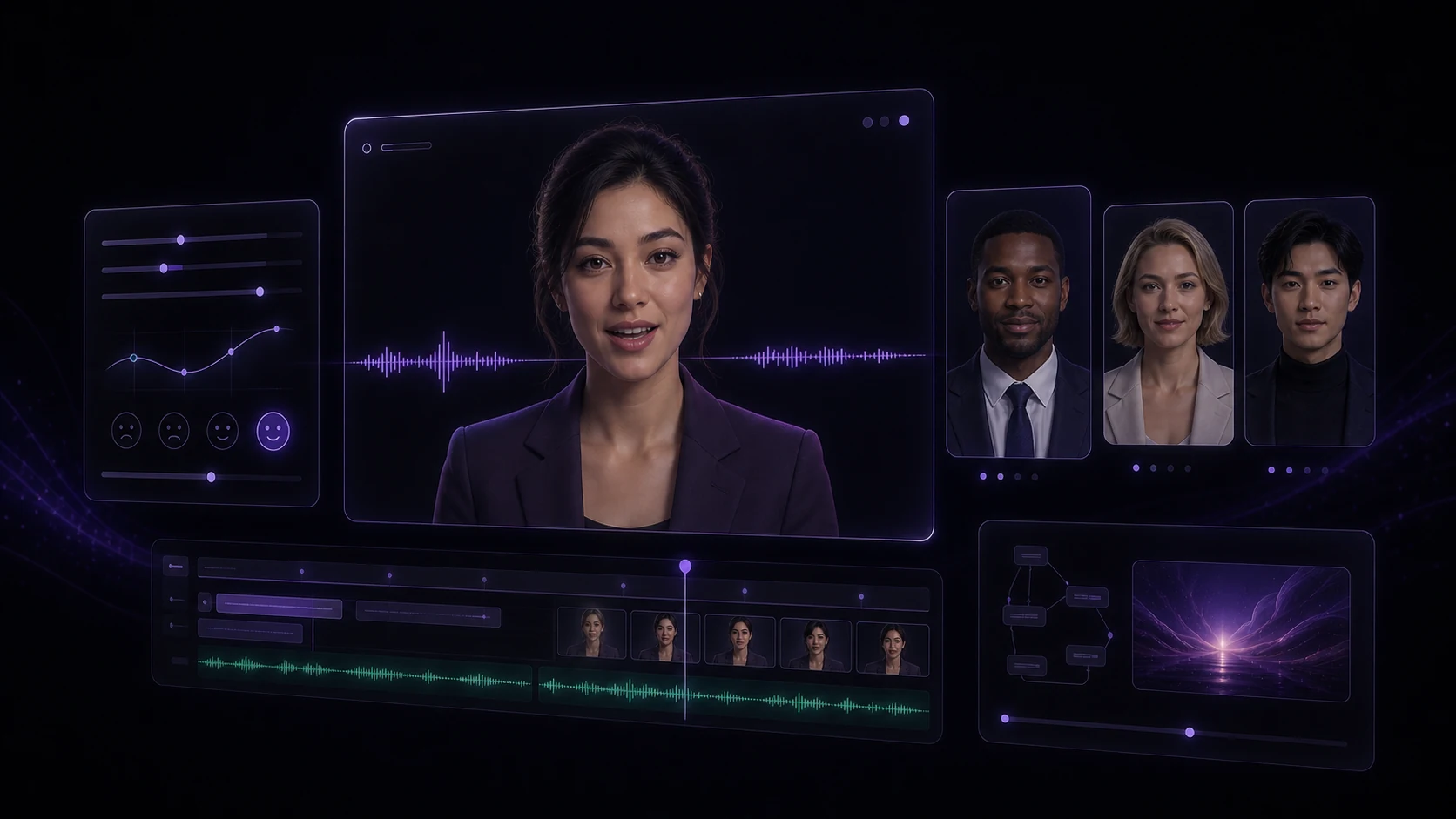
AI talking avatars have moved well past the uncanny valley of a few years ago. In 2026, a well-configured avatar can deliver a training module, product walkthrough, or social media clip that holds attention just as effectively as a human presenter — without the scheduling overhead, re-takes, or production cost.
This guide covers how the technology works, what to look for in a tool, and where talking avatars perform best across different use cases.
Part 1: How AI Talking Avatars Work
Modern talking avatars combine two core technologies: speech synthesis and facial animation.
Speech synthesis converts text (or an existing audio track) into natural-sounding speech, with control over voice, pace, and emotion. Facial animation maps that audio to lip movements, eye motion, and subtle head gestures to create the appearance of a real person speaking.
The better tools add:
- Emotion layering — the avatar's expression shifts to match the sentiment of the script
- Gesture sync — hand movements timed to speech emphasis points
- Background compositing — placing the avatar in a scene or over a custom background
- Multi-language support — the same avatar speaking in different languages without re-recording
A good talking avatar doesn't need to look 100% human — it needs to look intentional. Stylized or illustrated avatars often perform better in marketing contexts because they read as a brand asset rather than a failed imitation of a real person.
Part 2: Key Features to Compare
When evaluating talking avatar tools, focus on these areas:
Voice quality and naturalness Listen for breath patterns, pacing variation, and how the voice handles punctuation. Robotic cadence is the number-one reason viewers disengage.
Lip sync accuracy Check the sync at normal playback speed, not just in previews. Slight delays between mouth movement and audio are more disruptive than most people expect.
Avatar customization Can you adjust skin tone, clothing, age range, and setting? Avatars that look like they could belong to your brand are far more effective than generic stock characters.
Output resolution and format 1080p at minimum for anything going to YouTube, a website, or presentation. 4K support matters if you're producing content for large displays.
Script integration Does the tool accept plain text, SSML, or a structured script format? Clean script-to-video workflows save hours across a content operation.
VidReels offers all of the above, with particular strength in the script-to-avatar pipeline — paste in a script, choose a voice, select an avatar, and have a draft video ready to review in minutes.
Part 3: Use Cases by Industry
Training and Corporate Learning
Talking avatars are a natural fit for instructional content. A consistent avatar as a "trainer" character builds familiarity across a course. Updates are easy — change the script, regenerate the segment, and publish. No need to re-book a presenter.
Best practices:
- Keep training segments under 5 minutes
- Use a neutral, calm voice tone for instructional delivery
- Add chapter markers in the video to support navigation
Marketing and Product Demos
Avatars work well for product explainers, feature announcements, and FAQ videos. They scale easily — you can produce 20 product videos in the time it would take to film one.
Best practices:
- Match the avatar style to your brand aesthetic
- Use upbeat pacing for marketing content
- Add subtitles — most social video is watched muted
Social Media Content
Short-form avatar content performs well on platforms that reward frequency. An avatar allows you to publish consistently without always being on camera yourself.
Disclose when content features an AI avatar if your platform or jurisdiction requires it. Transparency builds long-term trust, particularly for audiences who are sensitive to AI-generated content.
Part 4: Limitations to Know About
Talking avatar tools are powerful but not without constraints:
- Complex emotional performances — subtle emotions (vulnerability, humor, genuine surprise) are still difficult for avatars. High-stakes emotional moments are better served by real humans.
- Custom avatar creation — creating a photo-realistic avatar of a specific person (including yourself) typically requires a short video recording session for training data.
- Long-form content — avatars hold attention well in clips under 10 minutes. Longer formats benefit from visual variety (screen shares, b-roll) rather than a single talking head.
Conclusion
Talking avatar technology in 2026 is mature enough to replace human presenters in a wide range of business video contexts — training, product demos, social media, and FAQ content all work well. The key is matching the tool's strengths to your use case and investing time in script quality, because the avatar delivers exactly what you write.
VidReels makes the end-to-end process manageable: from script to published video without a production team.